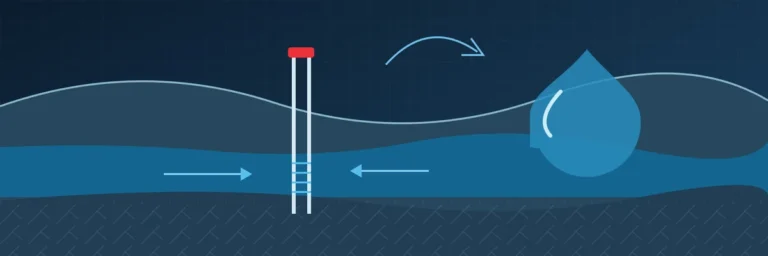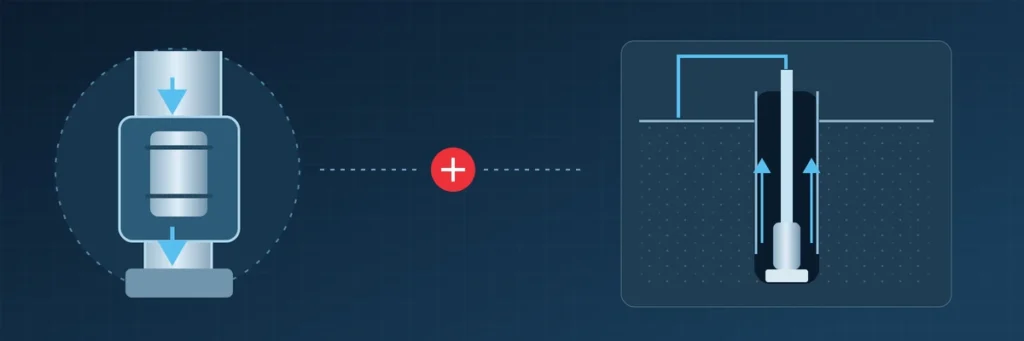
DTH and rotary drilling are often presented as completely separate technologies. The distinction needs care: DTH drilling also uses rotation. It combines that rotation with percussion from a hammer positioned behind the bit. A more precise comparison is between rotary-percussive DTH drilling and rotary drilling that cuts without a downhole percussion hammer.
Understanding how these systems work makes it easier to specify a complete borehole construction package.
How a DTH system works
In a pneumatic DTH system, the drill pipes transmit rotation and feed force while carrying compressed air to the hammer. Inside the hammer, a piston strikes the bit. Exhaust air then helps carry the resulting cuttings towards the surface. Additional drill pipes are connected as the borehole deepens.
The rig is therefore only one part of the system. The hammer, bit, drill pipes and air supply must all be considered when defining the drilling arrangement. Specify the intended borehole diameter and formation alongside the required depth.
How mud rotary circulation works
In conventional direct-circulation mud rotary drilling, fluid carries cuttings from the bottom of the borehole to the surface. The returns pass through arrangements that remove solids before the fluid is recirculated. Fluid condition and circulation are important parts of maintaining the drilling process.
For a rig review, ask how the rotary head, drilling tools and circulation equipment work together. Confirm which components are included in the quotation and which must be supplied separately.
Plan transitions through unstable ground
A borehole may encounter material that will not remain open without support. Casing-advancement systems address this challenge by advancing casing with the drilling assembly. Suitable systems can support the hole while passing through overburden towards bedrock, rather than relying on an unsupported opening.
The transition strategy should be agreed before drilling begins. Ask what evidence will trigger a change in method, how casing will be installed and whether the selected rig and tooling can carry out that sequence.
Design beyond the cutting diameter
The finished water well may require casing, screens and sealing materials. In unconsolidated formations, casing and screens help prevent collapse and sediment entry. Sealing around the casing helps limit contamination pathways from the surface. These construction requirements must be accommodated by the proposed borehole design.
Make the final construction drawing part of the equipment discussion. It should show what must fit inside the drilled hole, not merely the nominal bit diameter.
Specify a construction system
A useful quotation should explain the proposed method, supporting equipment and completion sequence. Treat compatibility between components as a central purchasing requirement.
Planning equipment for this work? Share the location, depth, diameter and ground conditions and we will propose a matched rig package.