Selecting a borehole drilling method is a practical decision about geology, construction requirements and available resources. Mechanised rotary drilling, cable-tool percussion and manual techniques all have roles, but their suitability differs. Hydrogeology, required yield and available funding influence the choice.
DTH drilling for competent rock
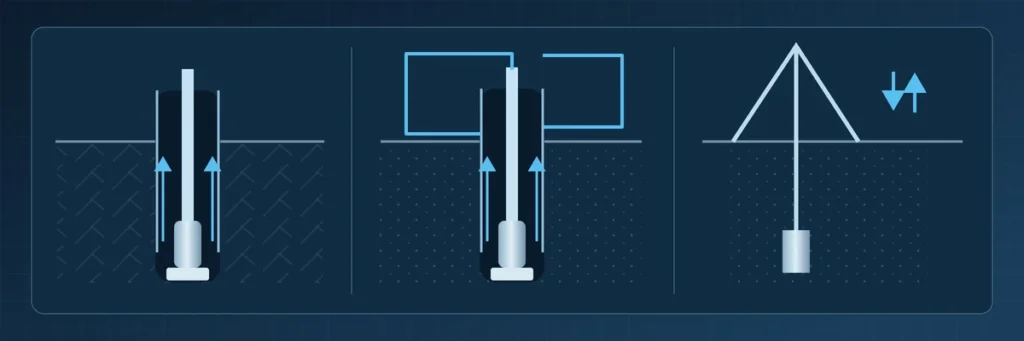
DTH drilling places a pneumatic hammer close to the cutting face. The hammer delivers repeated impacts while the drill string rotates, and compressed air helps remove the broken material. This makes DTH an important option for water boreholes that must penetrate hard, competent rock.
When considering this method, ask the equipment supplier to review the hammer, bit diameter, compressor and rig together. Also establish how the operation will pass through the upper formations before reaching competent rock. Selecting a hard-rock drilling method does not eliminate the need for an overburden construction plan.
Mud rotary for suitable softer formations
Mud rotary drilling circulates a prepared drilling fluid through the borehole. The fluid transports cuttings and can help support the borehole walls. Its formulation and condition require control throughout drilling; it is not simply ordinary muddy water pumped into the ground.
For equipment selection, include the mud pump, water supply, mixing arrangements and fluid-handling space in the project brief. Ask how the proposed drilling and completion programme will manage changing formations rather than assuming one fluid arrangement will suit the entire hole.
Cable-tool and manual alternatives
Cable-tool percussion is another established mechanised borehole drilling method. It belongs in a method assessment where local geological conditions, contractor experience and available equipment make it relevant. Rotary drilling is not the only possible mechanised approach.
Manual drilling can also support groundwater development in appropriate settings. It is generally associated with relatively shallow groundwater and suitable unconsolidated formations. Equipment can be easier to transport to some remote locations, but manual drilling is not a substitute for mechanised hard-rock capability where that capability is needed.
Select for the whole borehole
Prepare a method-selection brief that describes the expected sequence of ground conditions. Ask the contractor to explain the proposed approach to unstable material, changes in rock strength, casing installation and borehole completion.
A useful comparison should also separate drilling price from the scope included. Request clearly identified allowances for mobilisation, supporting equipment, development and testing. This makes it easier to compare proposals that may otherwise appear similar but cover different work.
Planning equipment for this work? Share the location, depth, diameter and ground conditions and we will propose a matched rig package.