
Borehole Drilling Rigs
Borehole drilling rigs are used for water well drilling, agricultural services, commercial boreholes, construction work and groundwater development. Synergy Rigs supplies borehole drilling rigs for different geological conditions and drilling requirements across Africa. Available configurations include truck-mounted, tractor-mounted, crawler-mounted and DTH drilling rigs.The right machine depends on drilling depth, bore diameter, rock formation, site access and drilling method.
Borehole Drilling Equipment and Supporting Systems
A borehole drilling rig normally operates together with additional equipment. Depending on the project, this can include:
- Air compressors
- Drill rods
- DTH hammers
- Drill bits
- Mud pumps
- Casing equipment
- Hydraulic and pneumatic components
Correct equipment matching is especially important for DTH drilling, where the compressor, hammer and drilling diameter need to work together.
Types of Borehole Drilling Rigs
Different rig configurations are suited to different access conditions and drilling requirements.
DTH Borehole Drilling Rigs
DTH, or down-the-hole, drilling rigs are commonly used for hard-rock formations. DTH drilling uses compressed air to operate a hammer positioned behind the drill bit. A typical system includes the rig, air compressor, DTH hammer, drill rods and drill bits.
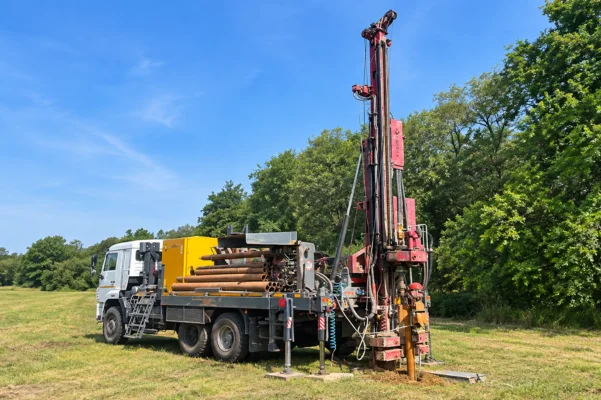
Truck-Mounted Borehole Drilling Rigs
Truck-mounted rigs are suitable for contractors who regularly move between drilling sites. They are commonly used for commercial borehole drilling and water well projects where road access is available.
Crawler-Mounted Borehole Drilling Rigs
Crawler rigs are designed for uneven terrain, remote locations and difficult-access sites. Their tracked undercarriage helps improve movement and positioning on rough ground.
How to Choose a Borehole Drilling Rig
Choosing the correct drilling rig requires more than comparing maximum drilling depth. Important factors include:
Geological Conditions
Ground conditions have a major influence on rig selection. Projects may involve soil, weathered formations, fractured rock or hard rock. Different formations require different drilling methods and tools.
Site Access
The drilling location helps determine whether truck, tractor or crawler mounting is more suitable. Consider road access, terrain, available space and how frequently the rig needs to move between sites.
Drilling Method
Rotary drilling and DTH drilling are used for different conditions. DTH drilling is commonly selected for hard rock, while other formations may require different drilling methods.
Bore Diameter
The required bore diameter affects the drilling tools and supporting equipment. Larger diameters may require different drill bits, rods, hammers and compressor capacity.
Drilling Depth
The rig should have sufficient capacity for the required borehole depth. Depth should also be considered together with bore diameter and drilling method.
Borehole Drilling Rigs for African Projects
Drilling services across Africa can involve very different working conditions, from commercial sites with road access to remote farms and rural groundwater projects. The most suitable rig should therefore match both the drilling requirement and the environment where it will operate. Important operating considerations can include:
Supporting equipment requirements
Availability of spare parts
Rough or uneven terrain
Hard-rock formations
Long travel distances
Rural access
Why Choose Synergy Rigs?
Choosing a borehole drilling rig is not only about finding a machine with the required depth capacity. The rig, drilling method, mounting system and supporting equipment should work together for the intended project.
Complete Drilling Equipment Support
Supporting equipment such as air compressors, drill rods, DTH hammers, drill bits and other compatible drilling accessories can be discussed together with the rig.
Equipment for Different African Projects
Rig configurations can be considered for agricultural, commercial, rural, water-supply and infrastructure projects across different African operating environments.
Multiple Rig Configurations
Truck-mounted, tractor-mounted, crawler-mounted and DTH borehole drilling rigs are available for different drilling environments and mobility requirements.
Rig Selection Based on Your Project
Synergy Rigs helps customers consider drilling depth, bore diameter, geology, site access and drilling method before selecting a rig configuration.
Spare Parts and Technical Support
Compatible spare parts, wear components and technical guidance can be provided for suitable supplied equipment.
Frequently Asked Questions
1. What is the best borehole drilling rig for water wells?
The best rig depends on the required drilling depth, bore diameter, geological formation, drilling method and site conditions. There is no single rig that is suitable for every water-well project.
2. How deep can a borehole drilling rig drill?
Drilling depth varies according to the rig model and configuration. Ground conditions, bore diameter, drilling method and drill-string requirements can also affect practical drilling capability.
3. Which drilling rig is best for hard rock?
DTH drilling rigs are commonly used for hard-rock formations because a pneumatic hammer delivers impact directly behind the drill bit while the drill string rotates.
4. What size air compressor is needed for DTH drilling?
Compressor requirements depend on the DTH hammer, bore diameter, drilling depth and operating conditions. The compressor should be matched to the hammer and drilling application rather than selected separately.
5. Are tractor-mounted borehole rigs suitable for farms?
Yes. Tractor-mounted rigs can be practical for agricultural boreholes, irrigation projects and rural locations where tractor access is suitable.
6. Can one rig perform RC and diamond core drilling?
Some multipurpose exploration rigs can support both RC and diamond core drilling when equipped with the appropriate systems and tooling.
7. Can one borehole drilling rig drill both soil and rock?
Some rigs can operate with different drilling methods and tools for mixed formations. The correct configuration depends on the geology and the drilling system supported by the machine.
8. How much does a borehole drilling rig cost?
Borehole drilling rig prices vary according to drilling capacity, mounting type, drilling method, hydraulic system, compressor requirements, drill rods, tools and accessories. A quotation should be based on the required equipment configuration.
9. What should I know before buying a borehole drilling rig?
Before requesting a rig, provide the required drilling depth, bore diameter, expected geology, project location, drilling method, site access and any supporting equipment required.