
Borehole Drilling Solutions for Agriculture
Reliable groundwater access is important for farms, irrigation projects, livestock operations, plantations and other agricultural activities. Synergyrigsafrica supplies borehole drilling rigs for agriculture across Africa, with machines suitable for different drilling depths, bore diameters, geological conditions and site requirements.
Agricultural boreholes can help reduce dependence on seasonal water sources, support a regular water supply and provide consistent irrigation for healthier crops and improved yields.
Drilling Methods for Agricultural Boreholes
The right drilling method depends mainly on the ground conditions and required drilling depth.
DTH Drilling
DTH drilling is commonly used for hard-rock formations. It uses compressed air and a down-the-hole hammer to drill efficiently through rock. Synergyrigsafrica can help select a suitable drilling configuration based on the expected geology and project requirements.
Rotary Drilling
Rotary drilling is suitable for many soil, soft formation and mixed-ground conditions. The drilling setup can be selected according to bore diameter, depth and site geology.
How Agricultural Borehole Drilling Works
Agricultural borehole drilling generally involves:
- Assessing water requirements for irrigation, crops or livestock.
- Selecting the drilling location based on groundwater potential and geology.
- Choosing the drilling rig according to depth, bore diameter and ground conditions.
- Drilling and completing the borehole with suitable casing and screens where required.
- Testing the borehole yield before selecting the pump and irrigation system.
Proper planning helps ensure the borehole is suitable for the farm's water requirements.
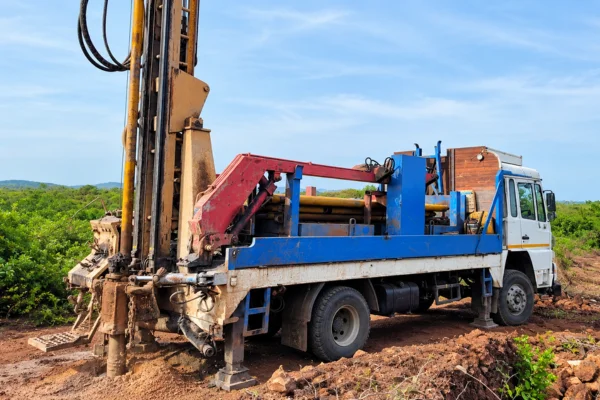
Features of Agricultural Borehole Drilling Rigs
Agricultural drilling rigs should be selected according to the conditions of the project.
Different Mounting Options
Tractor-mounted, crawler-mounted and truck-mounted rigs can be selected depending on terrain, transportation and site accessibility.
Suitable for African Operating Conditions
Our borehole drilling rigs are suitable for demanding rural and agricultural working environments across Africa.
Flexible Drilling Capacities
Machines can be selected according to the required drilling depth, bore diameter and expected drilling workload.
Suitable for African Operating Conditions
Our borehole drilling rigs are suitable for demanding rural and agricultural working environments across Africa.
Suitable for Different Ground Conditions
Rig configurations are available for soil, mixed formations and hard-rock drilling.
Borehole Water Solutions for Every Requirement
Agricultural borehole drilling rigs can support a wide range of farm water projects.
Horticulture and Greenhouses
Groundwater can support horticultural production and greenhouse irrigation where the borehole yield and water quality are suitable.
Plantations and Orchards
Borehole drilling can help provide water for plantations, orchards and large agricultural properties where reliable water access is required.
Industrial Water Requirements
Farm boreholes can supply water for cattle, dairy farms, poultry operations and other livestock requirements.
Irrigation
Boreholes can provide groundwater for crop irrigation and help maintain a more regular water supply during dry periods.
Why Choose our Agricultural Borehole Drilling Rigs?
Synergyrigsafrica supplies agricultural borehole drilling rigs for farms, irrigation projects and water-well contractors across Africa.
Supply Across Africa
We support agricultural borehole drilling equipment requirements in markets including South Africa, Kenya, Nigeria, Tanzania, Zimbabwe, Zambia, Ghana, Botswana and Namibia.
Built for Agricultural Applications
Our rigs can support borehole drilling for crop irrigation, livestock watering, plantations, horticulture and other farm water requirements.
Flexible Mounting Options
Choose from tractor-mounted, crawler-mounted and truck-mounted rigs depending on terrain, mobility and project requirements.
Multiple Drilling Options
Rotary and DTH drilling configurations are available for different soil, mixed-ground and hard-rock conditions.
Rig Selection Support
We help identify a suitable drilling rig based on drilling depth, bore diameter, geology and site conditions.
Spare Parts and Technical Support
Spare parts and technical assistance are available to support reliable, long-term drilling operations.
Information Required for Rig Selection
This information helps identify a suitable drilling configuration for the project. When requesting a drilling rig recommendation, provide:
Project country or location
Ground or rock conditions
Agricultural application
Preferred mounting type
Required bore diameter
Expected drilling depth
Frequently Asked Questions
1. What is the best borehole drilling rig for agricultural use?
The best rig depends on drilling depth, bore diameter, geology, site accessibility and the required drilling method.
2. How deep should an agricultural borehole be?
There is no standard depth. The required depth depends on local groundwater levels, geology and the location of suitable water-bearing formations.
3. Does drilling a deeper borehole provide more water?
Not always. Borehole yield depends mainly on the aquifer and geological conditions, so a deeper borehole does not automatically guarantee more water.
4. How much water can a farm borehole provide?
Water yield varies by location and aquifer. A yield test should be carried out after drilling to determine whether the borehole can provide enough water for irrigation or livestock.
5. Is DTH or rotary drilling better for farm boreholes?
It depends on the geology. DTH drilling is commonly used for hard rock, while rotary drilling can be suitable for soil, softer formations and certain mixed-ground conditions.
6. How much does agricultural borehole drilling cost?
Cost depends on drilling depth, geology, bore diameter, location, casing requirements and the drilling method.
7. Can a borehole provide enough water for irrigation?
Yes, where groundwater availability and borehole yield are sufficient. The farm's water demand and borehole yield should be assessed before planning the irrigation system.
8. How do I find the best location for a farm borehole?
A groundwater or hydrogeological survey can help identify suitable drilling locations based on geology and groundwater potential.
9. Does borehole water need to be tested for agriculture?
Yes. Water quality should be tested to confirm whether it is suitable for crops, irrigation systems or livestock use.
10. What information is needed to select a borehole drilling rig?
Provide the project location, expected drilling depth, bore diameter, ground conditions and preferred mounting type to help identify a suitable rig configuration.