
Crawler Drilling Rigs
Crawler drilling rigs combine tracked mobility with borehole drilling capability for projects where terrain and site access are important. Synergy Rigs Africa supplies crawler drilling rigs for water well, groundwater, agricultural and other drilling applications across Africa. Depending on the selected model, rigs can support rotary, DTH or combination drilling configurations for different geological conditions. The appropriate crawler rig depends on drilling depth, borehole diameter, ground formation, terrain and supporting equipment requirements.
Crawler Drilling Rigs for Difficult Terrain
The tracked undercarriage is one of the main advantages of a crawler mounted drilling rig. It allows the machine to move and position itself on suitable uneven, rough or remote drilling sites where conventional wheeled equipment may be less practical. Crawler rigs can be useful where projects involve:
- Uneven or rough terrain
- Remote drilling locations
- Limited site access
- Soft or irregular ground
- Frequent movement around a project site
- Sites requiring stable drilling positioning
Site gradient, ground conditions, rig weight and transport requirements should still be considered before selecting a machine.
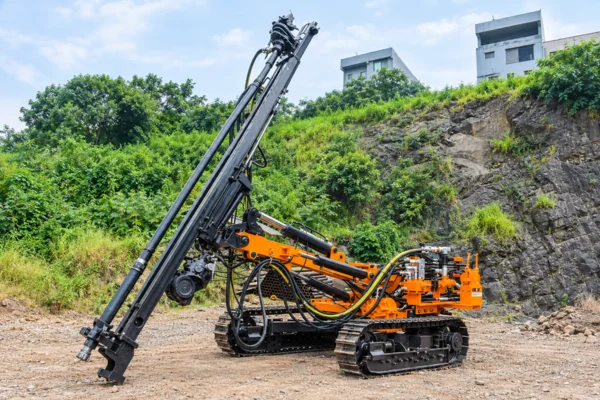
Types of Crawler Drilling Rigs
Different crawler drilling configurations are available according to the drilling method and project requirements.
Combination Crawler Drilling Rigs
Selected rigs can support more than one drilling method, allowing the drilling setup to be adapted where formation conditions or project requirements vary.
Water Well Crawler Drilling Rigs
Designed for groundwater and borehole projects where tracked mobility is useful for reaching and positioning at drilling locations.
Rotary Crawler Drilling Rigs
Rotary crawler rigs use a rotating drill string and suitable drilling tools for borehole and groundwater applications.
DTH Crawler Drilling Rigs
DTH crawler rigs use compressed air and a down-the-hole hammer for drilling through hard and competent rock formations.
Compact Crawler Drilling Rigs
Compact configurations can be considered where site access, manoeuvring space and machine dimensions are important.
Applications of Crawler Drilling Rigs
Water Well Drilling
Crawler water well drilling rigs can be used for groundwater development across agricultural, residential, commercial and community projects.
Geological and Specialised Drilling
Selected crawler rigs may also support geological, exploration and other specialised drilling applications depending on machine configuration.
Agricultural and Irrigation Boreholes
Tracked rigs can be practical for farms, plantations and irrigation projects where terrain makes site access an important consideration.
Commercial and Industrial Groundwater
Suitable configurations can support borehole development for commercial properties, construction sites and industrial facilities.
Features of Crawler Drilling Rigs
Actual features and specifications vary according to the individual rig model.Depending on the selected model, features can include:
Configurations for different drilling depths
Hydraulic feed and pullback system
Hydraulic drilling controls
DTH and rotary drilling compatibility
Different drill rod configurations
Adjustable rotation speed
Compressor or mud-pump compatibility
Multiple borehole diameter options
Heavy-duty drilling mast
Rig levelling and stabilising system
Tracked crawler undercarriage
High-torque rotary head
How to Select the Right Crawler Drilling Rig
The rig should be selected according to both the drilling requirement and the conditions at the project site.
Supporting Equipment
For DTH drilling, compressor capacity should be matched to the hammer and bore diameter. Rotary or mud drilling applications may require pumps and other circulation equipment.
Transport Requirements
Crawler rigs provide good on-site mobility, but machine dimensions and weight should also be considered when planning transport between project locations.
Terrain and Site Access
Consider ground conditions, slopes, working space and access to the drilling point when selecting the crawler configuration.
Drilling Depth and Diameter
Required depth and borehole diameter affect rig capacity, rotary torque, drill rods and drilling-tool requirements.
Geological Conditions
Soil, weathered formations and hard rock may require different drilling methods, bits and supporting equipment.
Drilling Method
The project may require rotary, DTH or a combination drilling configuration depending on the formation.
Why Choose Synergy Rigs Africa?
Supporting Drilling Equipment
Compatible compressors, mud pumps, drill rods, DTH hammers, bits and other drilling equipment can be discussed together with the rig.
Project-Based Rig Selection
Rig requirements can be discussed according to drilling depth, borehole diameter, geology, drilling method and terrain.
Equipment for Challenging Sites
Crawler drilling rigs can be selected for projects where terrain, site access and machine positioning are important.
Technical and Spare Parts Support
Customers can discuss machine configuration, compatible components and spare parts for suitable supplied equipment.
Multiple Drilling Configurations
Rotary, DTH and suitable combination configurations can be considered according to the project requirements.
Frequently Asked Questions
1. What is a crawler drilling rig?
A crawler drilling rig is a drilling machine mounted on a tracked undercarriage, providing practical mobility and positioning on suitable uneven or difficult terrain.
2. How does a crawler drilling rig work?
The crawler tracks move the rig into position. Once stabilised, the mast, rotary head, feed system and drilling tools work together to drill the borehole using the selected drilling method.
3. What are the advantages of crawler drilling rigs?
Crawler rigs provide tracked mobility, stable positioning and practical access to drilling locations where wheeled equipment may be less suitable.
4. Can crawler drilling rigs drill water wells?
Yes. Suitable crawler rigs can be configured for water well and groundwater drilling using rotary, DTH or other compatible drilling methods.
5. Can a crawler drilling rig drill hard rock?
Yes. A crawler rig configured for DTH drilling can drill hard-rock formations when used with a compatible compressor, hammer and drill bit.
6. How deep can a crawler drilling rig drill?
Drilling depth depends on the rig model, borehole diameter, drilling method, drill rod configuration and geological conditions.
7. What is the difference between crawler and truck mounted drilling rigs?
Crawler rigs use tracks for on-site mobility over suitable uneven terrain. Truck mounted rigs provide easier road transport between accessible drilling locations.
8. What size compressor is needed for a DTH crawler rig?
Compressor requirements depend on the DTH hammer, borehole diameter and drilling conditions. The compressor should be matched to the rig and DTH equipment.
9. What affects crawler drilling rig price?
Price depends on drilling capacity, rig configuration, rotary system, drilling method, hydraulic equipment, compressor requirements and accessories.